Work Truck Guide for Contractors and DIYers: High Desert
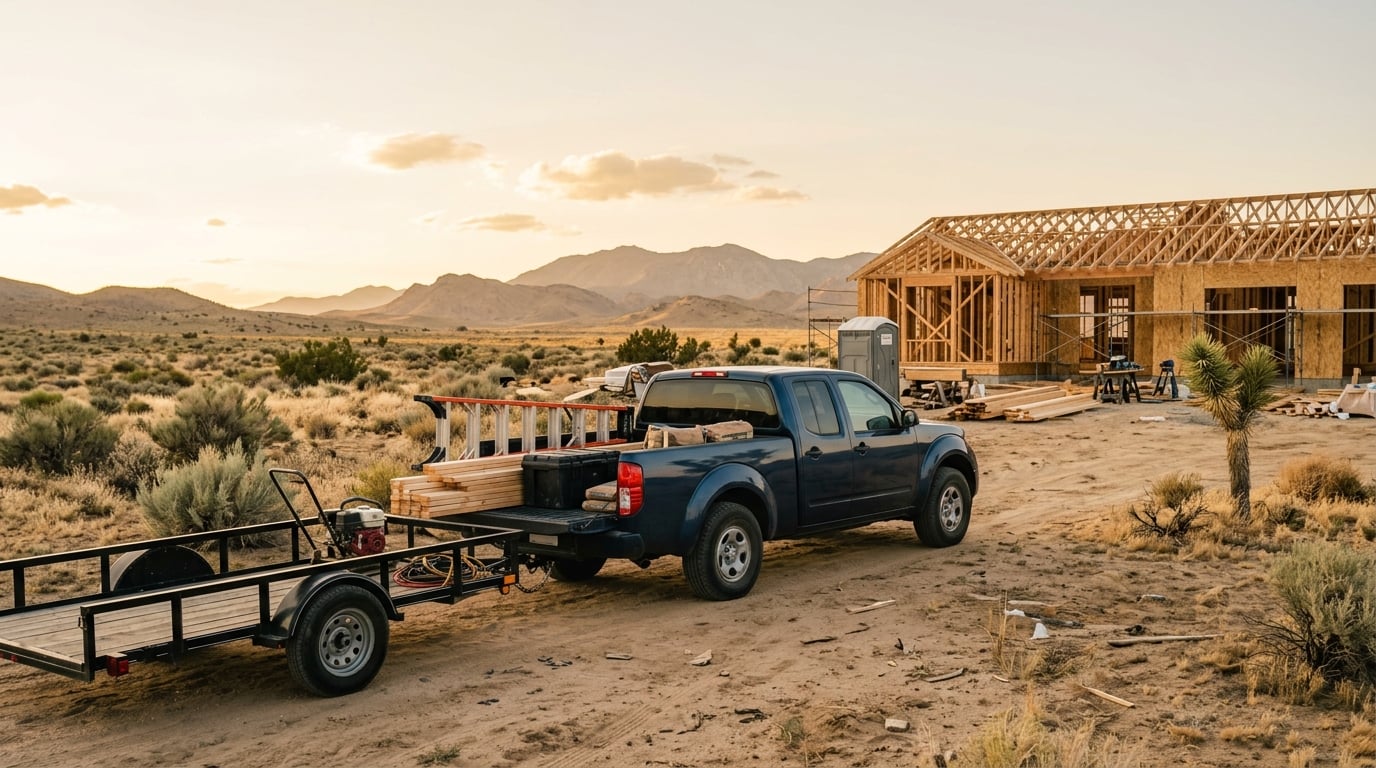
If you build, remodel, or fix things for a living (or every weekend), your vehicle is part of the toolbox. It has to haul materials, carry tools, tow a trailer, reach jobsites off the pavement, and still get you home on the I-15 in the summer heat. This guide is for contractors, tradespeople, and serious DIYers in Victorville and the High Desert who want to match a vehicle to the work, not just the badge.
What the Job Asks of Your Vehicle
Lumber, drywall, tile, bagged material, and appliances all need space, and some need a bed with a tailgate that makes loading easier.
Tools and equipment need secure, dry storage that is easy to reach. Think about what you leave in the vehicle overnight.
A trailer with a mower, mini-excavator, or materials puts different demands on a vehicle than a daily commute.
Construction sites and remodels do not always have paved access. Clearance and traction can matter.
Many work vehicles are also the family vehicle. Comfort, visibility, and driver-assist features add up over long days.
Summer heat and desert dust are hard on batteries, tires, air conditioning, and filters, and a loaded vehicle works harder.
Payload and Towing, Explained
Two numbers drive almost every work vehicle decision, and they are different:
- Payload is how much weight a vehicle can carry, including you, your crew, your tools, and the materials in the cab and bed.
- Towing capacity is how much a vehicle can pull behind it.
Both vary by model, configuration, engine, and equipment, and the highest figures a manufacturer advertises often apply only to certain setups. Your owner’s manual explains the load limits for your vehicle, including how a trailer’s weight affects the load you can carry. Before you commit to a vehicle for a heavy load or a trailer, confirm the ratings for the exact configuration and add up what you actually carry.
Matching a Vehicle to the Work
If you haul a few bags of material or a ladder and some tools, a midsize pickup or a vehicle with a large, flexible cargo area may be enough.
If you carry sheet goods, lumber, or equipment every week, bed size, tailgate design, and payload deserve a closer look.
If you tow often, start with the towing rating and hitch equipment for the exact configuration, and think about the trailer’s weight when it is loaded.
If the vehicle works all day, consider durability, service access, and how it will handle heat and heavy use over many months.
There is no single right vehicle for every job. A midsize pickup can be the right everyday choice for many tradespeople, while heavier trailers or loads may point toward a full-size truck. If you are not sure, tell us what you carry and tow, and we will help you compare.
What Our Pickups Offer
Here is how manufacturers describe the pickups at our Honda, Nissan, and Toyota stores. Availability, features, and drivetrains vary by model year, trim, and configuration, so ask about the specific truck you want.
- Honda Ridgeline: Honda describes a rugged midsize pickup with i-VTM4® all-wheel drive, a lockable In-Bed Trunk® with a drain plug, a dual-action tailgate that opens down or to the side, and a UV-stabilized, scratch-resistant composite bed.
- Nissan Frontier: Nissan describes the Frontier as a four-wheel-drive adventure companion with a V6 engine, with off-road-minded variants such as the PRO-4X.
- Toyota Tacoma: Toyota lists an available hybrid powertrain, automatic or manual transmission on available models, and trail-focused features on available models.
- Toyota Tundra: Toyota’s full-size pickup, with a twin-turbo V6 and an available hybrid drivetrain, and a focus on towing capability and rough-terrain performance.
Keeping a Work Vehicle Working
Heavy loads, towing, dust, and desert heat all add wear. A few habits help any work vehicle:
- Follow your owner’s manual. It explains maintenance and load guidance for your vehicle, including towing.
- Watch your tires. Check pressure and condition regularly, especially before carrying a heavy load or towing.
- Do not ignore cooling and air conditioning. Hot jobsites and long idling make both important. Our guide to a car AC blowing warm air explains the common causes.
- Use your service team. Our service centers can look at brakes, batteries, and fluids before small problems cost you a workday.
For more on what desert conditions ask of any vehicle, see our High Desert seasonal care guide.
How to Choose, Step by Step
- List your typical jobs. What do you carry, how far, and how often?
- Weigh your heaviest load. Add up tools, materials, and crew, then compare with the payload rating for the exact configuration.
- Check towing needs. Know the loaded weight of your trailer and the hitch equipment you need.
- Think about access. Will you drive on dirt, gravel, or uneven sites?
- Consider storage and security. Where do tools and materials ride, and how do you lock them up?
- Test drive with a real load in mind. Ask a specialist how to simulate your typical use.
- Ask about service. A vehicle that works every day needs a plan for maintenance.
Our Best SUVs for High Desert Driving and used car buying guide can help if a pickup is not the right fit or if you are shopping pre-owned.
The Same Commitment, Across All Four Brands
Valley Hi Honda, Valley Hi Kia, Valley Hi Nissan, and Valley Hi Toyota sit side by side in Victorville, each with its own sales, service, and parts teams working to the same standard. Tell us about the work you do, and we will help you compare options across our stores in a single visit.
Common Questions
What kind of truck is best for home improvement and construction work?
It depends on what you carry and tow. A midsize pickup can suit many tradespeople and DIYers, while heavier trailers or larger loads may point toward a full-size truck. Check the payload and towing ratings for the exact configuration before you decide.
What is the difference between payload and towing capacity?
Payload is how much weight a vehicle can carry in its cab and bed. Towing capacity is how much it can pull. Both vary by configuration, and your owner’s manual explains the limits for your vehicle.
Can a midsize pickup tow a trailer?
Many can, within their rated limits. Towing capacity varies by model and configuration, so confirm the rating for the exact vehicle and consider the loaded weight of your trailer.
How does desert heat affect a work vehicle?
Heat stresses batteries, tires, air conditioning, and cooling systems, and heavy loads or towing add more strain. Regular maintenance and checking your tires before a big job help.
Find a Vehicle That Works as Hard as You Do
Tell us what you haul, tow, and drive, and we will help you compare options across our four stores. Test drive on roads you know.
Availability, features, and drivetrain options vary by model, trim, and model year. Confirm with a product specialist. Payload, towing capability, and fuel economy depend on equipment, configuration, and driving conditions; see your owner’s manual. AWD and 4×4 cannot provide traction in every situation. Always drive for the conditions. i-VTM4 and In-Bed Trunk are registered trademarks of Honda Motor Co., Ltd. See dealer for details.




0 comment(s) so far on Work Truck Guide for Contractors and DIYers: High Desert