Best SUVs for High Desert Driving
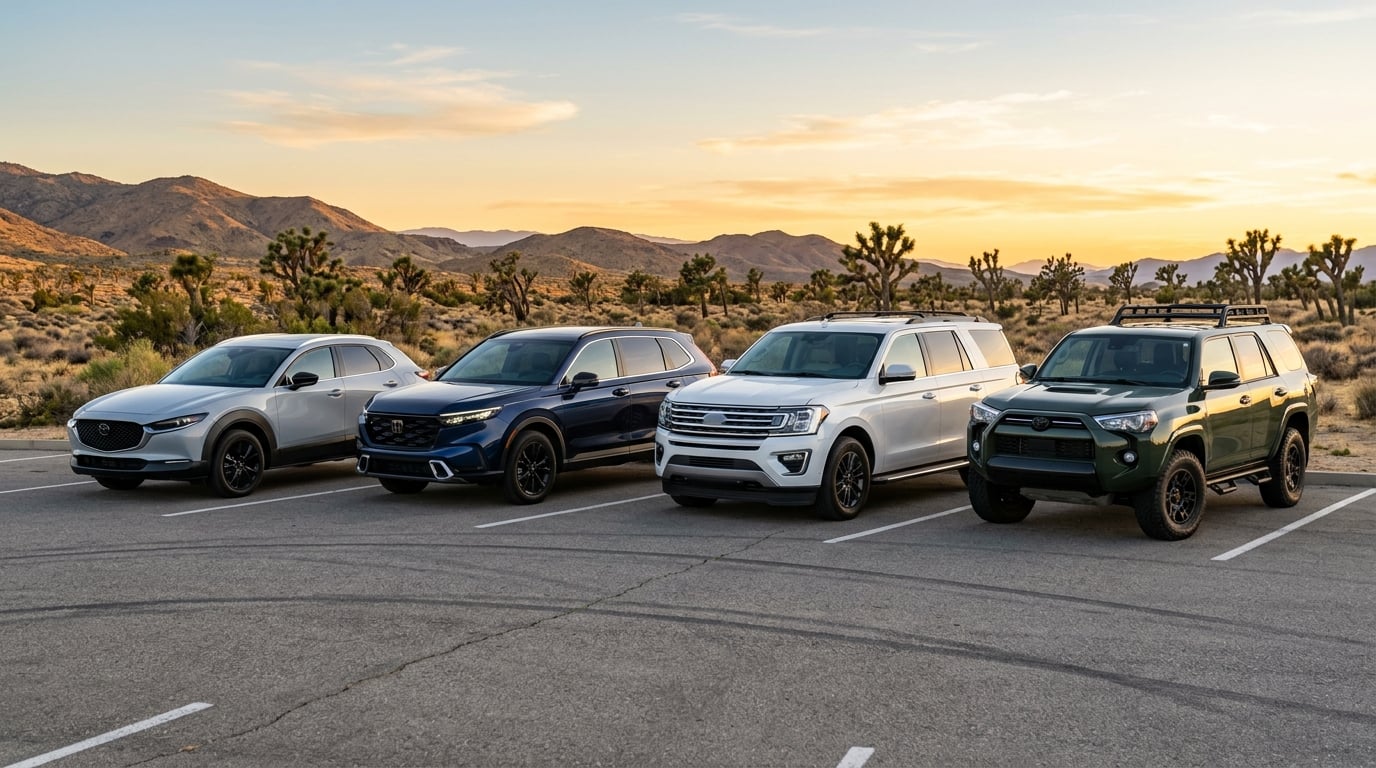
Between the daily I-15 commute, triple-digit summers, and weekend drives out past Apple Valley and Hesperia, High Desert roads ask a lot of an SUV. The right one depends on how many people you carry, how far you drive, and what kind of road you see most. This guide walks through the choices so you can narrow the field before you visit a lot, whether you end up in a Honda, Kia, Nissan, or Toyota.
What High Desert Driving Asks of an SUV
Most SUV advice is written for places with mild weather and short commutes. Victor Valley driving is different, and a few local conditions are worth weighing before you pick a size or a drivetrain.
Triple-digit days put a real load on air conditioning, batteries, and tires. A strong A/C system and good cabin cooling matter more here than a long feature list.
Many drivers spend a lot of time on I-15 and the climb through the Cajon Pass. Fuel economy, passing power, and driver-assist features add up over a long commute.
Loose dirt and sand are part of life out here. Ground clearance and traction help on unpaved roads, and it is worth asking your service team how often to check the cabin air filter.
Cold desert nights and shifting weather on the pass mean traction and good tires are worth thinking about, even if you rarely leave pavement.
Start With Size and Seating
Size is the first decision, and it narrows the list faster than anything else. Here is how the four Valley Hi brands line up, grouped by class.
Easy to park and efficient for solo commutes or couples. Honda HR-V, Kia Seltos, Nissan Kicks, and Toyota Corolla Cross.
The most popular size: room for a small family, with cargo space that folds flexibly. Honda CR-V, Kia Sportage, Nissan Rogue, and Toyota RAV4.
More cargo room and capability than a compact. Honda Passport, Nissan Murano, and Toyota 4Runner. Seating and third-row availability vary by model and trim.
Space for carpools and road trips, with seven or eight seats depending on the model and configuration. Honda Pilot, Kia Sorento and Telluride, Nissan Pathfinder, and Toyota Highlander and Grand Highlander.
If you need maximum space or tow capability, Nissan and Toyota also offer full-size SUVs (Nissan Armada and Toyota Sequoia, with the Toyota Land Cruiser as another option). Towing ratings vary by model, engine, and equipment, so check the owner’s manual and talk with a product specialist before you load up a trailer.
All-Wheel Drive, 4×4, and Hybrids
Drivetrain choices are where local driving habits matter most. A few plain-language points can help you sort them out.
- All-wheel drive (AWD) sends power to all four wheels to help with traction on sand, gravel, loose dirt, and wet or cold pavement. It does not shorten stopping distances, so good tires and careful driving still come first.
- 4×4 and trail-minded models add ground clearance and drive modes aimed at rougher terrain. They make the most sense if unpaved roads are part of your regular routine.
- Hybrid and plug-in hybrid versions are offered across several models in all four brands, including popular compact and midsize SUVs. Hybrids often show their biggest efficiency gains in stop-and-go driving, and the gap can be smaller at steady highway speeds. Your own results will depend on how and where you drive.
- Availability varies by model, trim, and model year. Ask your product specialist which versions are offered on the vehicle you like.
How to Choose, Step by Step
- List your daily use. Commute length, kids or passengers, cargo, and any towing or trail plans.
- Count the seats you really need. A third row is great for carpools, but it is extra size if you rarely use it.
- Decide how much traction you want. Pavement-only drivers may be fine without AWD. Dirt roads and changing weather make a stronger case for it.
- Think about fuel type. Compare gas, hybrid, and plug-in options against your actual miles and where you can charge or fuel up.
- Test drive in real conditions. Try it on the freeway, in traffic, and in the afternoon heat. See how fast the cabin cools and how the ride feels.
- Ask about ownership. Find out how service, maintenance, and parts work for the model you are considering. Our High Desert seasonal care guide covers what desert driving does to a vehicle over time.
Not sure which brand to start with? Our brand-by-brand buyer’s guide compares what each of the four dealerships is known for. If you are leaning toward pre-owned, see why many drivers shop used SUVs right here in the High Desert.
The Same Commitment, Across All Four Brands
Valley Hi Honda, Valley Hi Kia, Valley Hi Nissan, and Valley Hi Toyota sit side by side in Victorville, so you can compare SUVs from every brand in one trip. Each dealership has its own product specialists, service department, and parts team, and every one of them works from the same standard: help you find the vehicle that fits your life and keep it running well for the miles ahead. Whichever badge you choose, you are shopping with a local team that drives the same roads you do.
Common Questions
What is the best SUV for driving in the High Desert?
The best SUV depends on how you use it. Compact SUVs suit most commuters and small families, three-row models suit carpools and road trips, and trail-minded midsize models suit drivers who often leave pavement. Honda, Kia, Nissan, and Toyota all offer options in the subcompact, compact, and three-row groups.
Do I need all-wheel drive in Victorville?
Not everyone does. If most of your driving is on dry pavement, many drivers do fine with front-wheel drive. AWD can add traction on sand, gravel, loose dirt, and the occasional wet or cold road, but it does not help you stop sooner, so tires and driving habits still matter most.
Is a hybrid SUV a good choice for Victor Valley commutes?
It can be. Hybrids often save the most fuel in stop-and-go traffic, while the advantage can be smaller at steady freeway speeds. If your commute mixes both, a test drive on your usual route is the best way to judge whether a hybrid fits.
How does desert heat affect an SUV?
Heat is hard on batteries, tires, air conditioning, and interior materials. Regular maintenance and a seasonal inspection by a service team can help you catch wear early. Shade, sunshades, and keeping tires properly inflated also help.
Find the SUV That Fits Your Drive
Browse SUVs from all four Valley Hi dealerships, then take your favorites for a test drive on the roads you actually use.
Vehicle availability, features, and drivetrain options vary by model, trim, and model year. See your product specialist for details. Fuel economy and towing capability depend on equipment and driving conditions.



0 comment(s) so far on Best SUVs for High Desert Driving